


In the food - processing industry, the quality and safety of products are of utmost importance. The control of moisture in compressed air is a critical factor that profoundly affects both product quality and safety. As a supplier of industrial air treatment solutions, I often encounter inquiries regarding the suitability of Non Thermal Regeneration Adsorption Dryers in food - processing operations. This blog aims to explore whether this type of dryer can indeed be used in the food - processing industry.
Importance of Compressed Air Quality in Food Processing
Compressed air is widely used in the food - processing industry for various purposes, such as packaging, transporting raw materials, and operating pneumatic equipment. Moisture in compressed air can lead to a series of problems. It can cause rust inside the pipelines and equipment, which not only shortens the service life of the equipment but also poses a threat to product safety if rust particles enter the food. Moreover, moisture can provide a breeding ground for bacteria, fungi, and other microorganisms, potentially contaminating the food products.
In addition, the presence of moisture can affect the physical properties of food products. For example, in the production of powdered foods, excessive moisture in the compressed air can cause the powder to clump, which is not only unappealing in terms of appearance but also affects the quality and usability of the product. Therefore, achieving high - quality, dry compressed air is crucial in maintaining the integrity and safety of food products.
How Non Thermal Regeneration Adsorption Dryers Work
A Non Thermal Regeneration Adsorption Dryer operates based on the principle of adsorption. It typically consists of two adsorption towers filled with adsorbent materials, such as activated alumina or molecular sieves. When the moist compressed air enters one of the towers, the adsorbent material captures the water vapor molecules, effectively drying the air.
While one tower is in the adsorption phase, the other tower undergoes a regeneration process. In non - thermal regeneration dryers, this is usually achieved by using a small portion of the dried air to purge the adsorbent in the other tower. The purged air carries away the desorbed water vapor, restoring the adsorbent's drying capacity. This continuous cycle allows the dryer to provide a consistent supply of dry compressed air.
Advantages of Using Non Thermal Regeneration Adsorption Dryers in Food Processing
High - Quality Drying
Non Thermal Regeneration Adsorption Dryers can achieve extremely low dew points, often as low as - 40°C or even lower. This high - level of drying ensures that the compressed air is free of moisture, reducing the risk of microbial growth and product contamination. In food processing, where strict hygiene standards are required, this is a significant advantage.
Energy Efficiency
Compared to some other types of dryers, non - thermal regeneration dryers can be relatively energy - efficient. Since they do not rely on external heat sources for regeneration, they consume less energy during operation. This can result in cost savings for food - processing companies in the long run, especially for large - scale operations with high - volume compressed air usage.
Compact Design
These dryers usually have a compact and modular design, which makes them easy to install in existing food - processing facilities. They take up less floor space compared to some larger drying systems, and their modular nature allows for flexibility in system configuration and expansion as the business grows.
Challenges and Considerations
Air Loss During Regeneration
One of the main challenges of non - thermal regeneration dryers is the air loss during the regeneration process. A certain portion of the dried air is used to purge the adsorbent, which means that there is a constant loss of compressed air. In a food - processing facility, where compressed air is a valuable resource, this air loss needs to be carefully considered. However, advancements in technology have led to the development of more efficient purge control systems that can minimize this air loss.
Adsorbent Replacement
The adsorbent materials in the dryer need to be replaced periodically. Over time, the adsorbent loses its effectiveness due to factors such as contamination and wear. This requires regular maintenance and monitoring. In the food - processing industry, where downtime can be costly, a well - planned maintenance schedule is essential to ensure continuous operation of the drying system.
Compatibility with Food - Grade Requirements
It is crucial to ensure that all components of the Non Thermal Regeneration Adsorption Dryer are compatible with food - grade requirements. This includes the adsorbent materials, gaskets, and any other parts that come into contact with the compressed air. Suppliers should be able to provide documentation and certifications to prove the food - grade compliance of their products.
Comparison with Other Types of Dryers
Heatless Combined Dryer
A Heatless Combined Dryer is another option for producing dry compressed air. In some ways, it shares similarities with the Non Thermal Regeneration Adsorption Dryer, as it also uses adsorption for drying and a purge process for regeneration. However, heatless combined dryers may offer different performance characteristics in terms of dew point and air flow rate. They may also have different energy consumption profiles, with some heatless combined dryers being more energy - intensive than non - thermal regeneration dryers.
Freezing Dryer
Freezing Dryers work by cooling the compressed air to condense the water vapor, which is then removed by a separator. While freezing dryers are relatively simple and cost - effective, they have limitations in achieving very low dew points. In food - processing applications where extremely dry air is required, Non Thermal Regeneration Adsorption Dryers are often a more suitable choice as they can provide much lower dew points.
Conclusion
In conclusion, Non Thermal Regeneration Adsorption Dryers can be a viable option for the food - processing industry. Their ability to provide high - quality, dry compressed air is crucial for maintaining product quality and safety. While they do come with some challenges, such as air loss during regeneration and the need for regular adsorbent replacement, these issues can be managed with proper system design, maintenance, and monitoring.
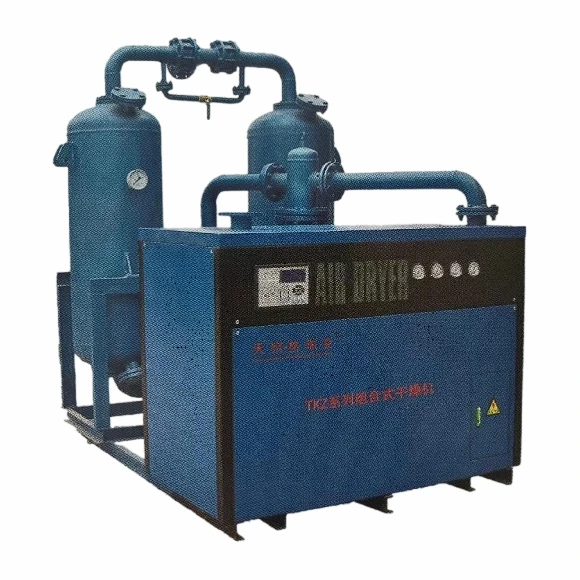

When considering the use of a Non Thermal Regeneration Adsorption Dryer in a food - processing facility, it is important to assess the specific requirements of the operation, including air quality needs, energy consumption, and budget constraints. Our company offers a range of Non Thermal Regeneration Adsorption Dryers that are designed to meet the stringent standards of the food - processing industry. If you are interested in learning more about how our dryers can enhance your food - processing operations, we encourage you to reach out to us for a detailed discussion and to explore the possibility of a procurement solution that fits your needs.
References
- ASHRAE Handbook - HVAC Systems and Equipment. American Society of Heating, Refrigerating and Air - Conditioning Engineers.
- Compressed Air and Gas Handbook. Ingersoll Rand Company Limited.
- Food Safety Modernization Act (FSMA) regulations related to air quality in food processing. US Food and Drug Administration.


