


Can a Precision Filter remove heavy metals?

Hey there! I'm a supplier of Precision Filters, and today I wanna have a chat about whether a Precision Filter can remove heavy metals. It's a hot topic, especially when it comes to water treatment and air purification.
First off, let me tell you a bit about Precision Filters. You can check out more details on our Precision Filter page. These filters are designed to trap really tiny particles, making the air or water cleaner. They work by forcing the fluid through a fine - meshed material that catches the unwanted stuff.
Now, heavy metals are a big deal. Metals like lead, mercury, cadmium, and arsenic can be super harmful to our health. They can cause all sorts of problems, from damage to the nervous system to kidney failure. So, it's crucial to get rid of them from our environment, especially from the water we drink and the air we breathe.
Let's start with water treatment. In water, heavy metals often exist as ions. A basic Precision Filter might not be enough to remove these ions on its own. The pores in a typical Precision Filter are designed to catch physical particles, like dirt, sand, and some larger microorganisms. Heavy metal ions are way smaller and can easily pass through these pores.
However, there are special types of Precision Filters that are engineered to deal with heavy metals. Some filters are coated with substances that can attract and bind to heavy metal ions. For example, activated carbon can adsorb certain heavy metals. When water passes through a Precision Filter with an activated carbon layer, the heavy metal ions stick to the carbon surface.
Another approach is using ion - exchange resins in Precision Filters. These resins have a chemical structure that allows them to swap ions. They can exchange harmless ions in the resin for heavy metal ions in the water. This way, the heavy metals are removed from the water flow.
In air purification, heavy metals can be present in the form of fine dust particles or as part of gaseous compounds. A regular Precision Filter can capture the dust particles that contain heavy metals. But for gaseous heavy metal compounds, more advanced filtration techniques are needed.
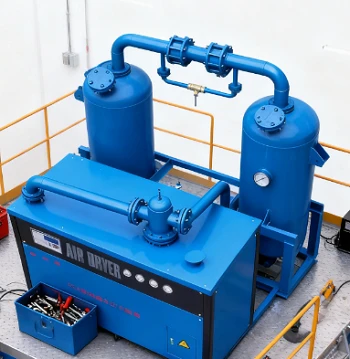
Some Precision Filters are combined with other air treatment technologies. For instance, they can be used in conjunction with a Micro Heat Combined Dryer. This dryer can help in removing moisture from the air, which might also contain some heavy metal - bearing particles. The Precision Filter then takes over to trap the remaining solid particles.
A Freezing Dryer can also be used in the process. It cools the air to condense and remove water vapor. This can sometimes cause heavy metal - containing aerosols to settle, making it easier for the Precision Filter to capture them.
But it's important to note that the effectiveness of a Precision Filter in removing heavy metals depends on several factors. The type of heavy metal matters a lot. Different metals have different chemical properties, and some are easier to remove than others. The concentration of heavy metals in the fluid also plays a role. If the concentration is too high, the filter might get saturated quickly and lose its effectiveness.
The flow rate of the fluid passing through the filter is another crucial factor. If the water or air is flowing too fast, there might not be enough time for the heavy metal ions or particles to interact with the filter media. On the other hand, if the flow rate is too slow, it can cause a bottleneck in the system.
The quality and maintenance of the Precision Filter are also vital. A well - maintained filter with the right media can perform better. Regularly replacing the filter media ensures that it continues to work effectively. If the filter is clogged or damaged, it won't be able to remove heavy metals as efficiently.
So, to answer the question "Can a Precision Filter remove heavy metals?" The answer is it depends. A basic Precision Filter might not be sufficient, but with the right design, coating, and combination with other technologies, it can definitely play a significant role in heavy metal removal.
If you're dealing with heavy metal contamination in your water or air and are looking for a solution, we're here to help. Our Precision Filters are designed with the latest technology to provide the best possible performance. Whether you need a simple filter for basic particle removal or a more advanced system for heavy metal removal, we've got options.
We understand that every situation is unique, and we're ready to work with you to find the perfect filtration solution. Don't hesitate to reach out to us for a consultation. We can discuss your specific needs, analyze the contamination levels, and recommend the most suitable Precision Filter for your application.
Let's work together to create a cleaner and safer environment by effectively removing heavy metals. Contact us today to start the conversation about your filtration requirements.
References
- "Water Treatment Handbook" by various authors, a comprehensive guide on water treatment technologies including filtration.
- "Air Pollution Control: A Design Approach" which covers different air purification methods and the role of filters.


