


As a supplier of Heatless Combined Dryers, I've witnessed firsthand the challenges and intricacies of operating these essential pieces of equipment in a corrosive gas environment. In this blog, I'll delve into the working principles of a Heatless Combined Dryer in such harsh conditions, exploring how it functions, its advantages, and considerations for optimal performance.
Understanding the Basics of a Heatless Combined Dryer
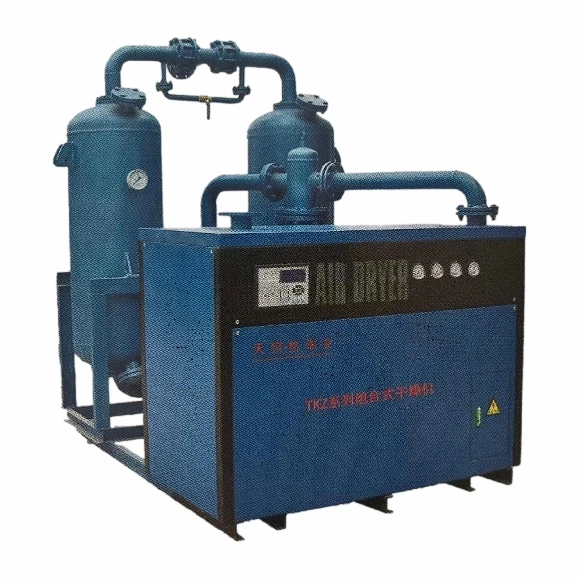
Before we dive into the specifics of its operation in a corrosive gas environment, let's briefly review how a Heatless Combined Dryer Heatless Combined Dryer works in general. A Heatless Combined Dryer is designed to remove moisture from compressed air, ensuring that the air used in various industrial processes is dry and free from contaminants. It combines the benefits of a freezing dryer and a micro thermal regeneration adsorption dryer to achieve a high level of air drying efficiency.
The process begins with the compressed air entering the freezing dryer Freezing Dryer. Here, the air is cooled to a low temperature, causing the moisture in the air to condense into liquid form. The condensed water is then separated from the air and drained out of the system. This initial step significantly reduces the moisture content in the compressed air.
After passing through the freezing dryer, the partially dried air enters the micro thermal regeneration adsorption dryer Micro Thermal Regeneration Adsorption Dryer. In this stage, the air flows through a bed of adsorbent material, such as activated alumina or silica gel. The adsorbent material has a high affinity for water molecules, attracting and holding them onto its surface. As the air passes through the adsorbent bed, the remaining moisture is removed, resulting in extremely dry air.
Challenges in a Corrosive Gas Environment
Operating a Heatless Combined Dryer in a corrosive gas environment presents several unique challenges. Corrosive gases, such as sulfur dioxide, hydrogen sulfide, and chlorine, can react with the components of the dryer, causing corrosion and damage over time. This can lead to reduced performance, increased maintenance requirements, and even premature failure of the equipment.
One of the primary concerns in a corrosive gas environment is the corrosion of the metal components in the dryer. The freezing dryer and the adsorption dryer both contain metal parts, such as heat exchangers, pipes, and valves, which are susceptible to corrosion. Corrosion can cause these components to deteriorate, leading to leaks, reduced heat transfer efficiency, and impaired functionality.
Another challenge is the impact of corrosive gases on the adsorbent material in the adsorption dryer. Corrosive gases can react with the adsorbent, reducing its effectiveness in removing moisture from the air. This can result in higher dew points and lower quality of the dried air. Additionally, the reaction between the corrosive gases and the adsorbent can generate by-products that can contaminate the air and cause further damage to downstream equipment.
How a Heatless Combined Dryer Overcomes Corrosion Challenges
Despite the challenges posed by a corrosive gas environment, a well-designed Heatless Combined Dryer can effectively overcome these issues and provide reliable performance. Here are some of the ways in which a Heatless Combined Dryer is engineered to resist corrosion:
Corrosion-Resistant Materials
One of the key strategies in combating corrosion is the use of corrosion-resistant materials in the construction of the dryer. For example, the heat exchangers in the freezing dryer can be made from stainless steel or other corrosion-resistant alloys. These materials have a high resistance to corrosion and can withstand the harsh conditions in a corrosive gas environment.
Similarly, the pipes and valves in the dryer can be made from materials such as PVC, CPVC, or PTFE, which are highly resistant to corrosion. These materials are non-reactive with most corrosive gases and can provide long-lasting protection against corrosion.
Coating and Linings
In addition to using corrosion-resistant materials, the metal components in the dryer can be coated or lined with a protective layer to further enhance their resistance to corrosion. For example, the interior surfaces of the heat exchangers and pipes can be coated with a corrosion-resistant paint or epoxy. This coating acts as a barrier between the metal and the corrosive gases, preventing direct contact and reducing the risk of corrosion.
Some dryers also feature a lining made of a corrosion-resistant material, such as rubber or plastic, on the interior surfaces of the adsorption dryer vessels. This lining provides an additional layer of protection for the adsorbent material and helps to prevent corrosion of the vessel walls.
Proper Ventilation and Drainage
Proper ventilation and drainage are essential in a corrosive gas environment to prevent the accumulation of corrosive gases and moisture in the dryer. The dryer should be installed in a well-ventilated area to ensure that any corrosive gases are quickly removed from the vicinity of the equipment. Additionally, the dryer should be equipped with a proper drainage system to remove any condensed water and prevent it from pooling in the system.

Regular maintenance and inspection of the ventilation and drainage systems are also important to ensure that they are functioning properly. Any blockages or leaks in the ventilation or drainage systems should be promptly addressed to prevent corrosion and damage to the dryer.
Adsorbent Selection
The choice of adsorbent material is crucial in a corrosive gas environment. Some adsorbents are more resistant to corrosion than others and can better withstand the presence of corrosive gases. For example, activated alumina is generally more resistant to corrosion than silica gel and is often preferred for use in corrosive gas environments.
In addition to selecting a corrosion-resistant adsorbent, it is also important to monitor the performance of the adsorbent regularly. Over time, the adsorbent may become saturated with moisture and contaminants, reducing its effectiveness in removing moisture from the air. Regular replacement of the adsorbent is necessary to ensure optimal performance of the dryer.
Advantages of Using a Heatless Combined Dryer in a Corrosive Gas Environment
Despite the challenges associated with operating in a corrosive gas environment, there are several advantages to using a Heatless Combined Dryer in such conditions:
High Efficiency
A Heatless Combined Dryer combines the benefits of a freezing dryer and an adsorption dryer to achieve a high level of air drying efficiency. This means that it can effectively remove moisture from the compressed air, even in a corrosive gas environment, ensuring that the air used in industrial processes is dry and free from contaminants.
Reliability
Heatless Combined Dryers are designed to be reliable and durable, even in harsh operating conditions. With proper maintenance and the use of corrosion-resistant materials, a Heatless Combined Dryer can provide long-lasting performance in a corrosive gas environment, reducing the risk of downtime and costly repairs.
Cost-Effectiveness
Compared to other types of dryers, a Heatless Combined Dryer can be a cost-effective solution for drying compressed air in a corrosive gas environment. It requires less energy to operate than some other types of dryers, and its relatively simple design makes it easier to maintain and repair.
Considerations for Optimal Performance
To ensure optimal performance of a Heatless Combined Dryer in a corrosive gas environment, it is important to consider the following factors:
Proper Sizing
Proper sizing of the dryer is essential to ensure that it can handle the required air flow rate and moisture load. In a corrosive gas environment, it is important to select a dryer that is slightly oversized to account for any potential reduction in performance due to corrosion.
Regular Maintenance
Regular maintenance is crucial in a corrosive gas environment to prevent corrosion and ensure the long-term performance of the dryer. This includes regular inspection of the components, cleaning of the heat exchangers and adsorbent beds, and replacement of any worn or damaged parts.
Monitoring and Control
Monitoring and control of the dryer's performance is important to detect any potential issues early and take corrective action. This includes monitoring the dew point of the dried air, the temperature and pressure of the system, and the flow rate of the compressed air.
Conclusion
A Heatless Combined Dryer is a reliable and efficient solution for drying compressed air in a corrosive gas environment. By using corrosion-resistant materials, proper coating and linings, and effective ventilation and drainage systems, a Heatless Combined Dryer can overcome the challenges posed by corrosive gases and provide long-lasting performance.
If you are in the market for a Heatless Combined Dryer for your industrial application in a corrosive gas environment, I encourage you to contact us to discuss your specific requirements. Our team of experts can help you select the right dryer for your needs and provide you with the support and service you need to ensure optimal performance.
References
- Compressed Air and Gas Handbook, 7th Edition
- Industrial Drying Handbook, 4th Edition
- Handbook of Adsorption Technology


