


Hey there! As a supplier of screw air compressors, I often get asked this question: "How often should I change the lubricating oil in a screw air compressor?" Well, there's no one - size - fits - all answer, but I'm gonna break it down for you.
First off, let's understand why lubricating oil is so important in a screw air compressor. The lubricating oil does a bunch of crucial jobs. It lubricates the moving parts, which reduces friction and wear. This means your compressor can run smoothly and last longer. It also helps with sealing, preventing air leakage between the rotors and the compressor housing. Plus, it acts as a coolant, taking away the heat generated during the compression process.
Now, the frequency of oil changes depends on several factors. One of the main factors is the operating hours. Most manufacturers recommend changing the lubricating oil every 2000 - 4000 operating hours. But this is just a general guideline. If your compressor is running in a harsh environment, you might need to change the oil more often.
For example, if the compressor is used in a dusty environment, the dust can get into the oil and contaminate it. Dust particles can act like abrasives, causing more wear on the compressor's internal parts. In this case, you might want to change the oil every 1500 - 2000 hours. On the other hand, if the compressor is used in a clean and well - ventilated area, you could potentially stretch the oil change interval to 3000 - 4000 hours.
Another factor is the type of oil you're using. There are different grades and qualities of lubricating oils for screw air compressors. Synthetic oils generally have better performance and longer service life compared to mineral oils. Synthetic oils can withstand higher temperatures and are more resistant to oxidation and degradation. So, if you're using a high - quality synthetic oil, you might be able to go a bit longer between oil changes. Some synthetic oils can last up to 8000 operating hours, but again, this depends on the operating conditions.
The load on the compressor also matters. If your compressor is running at full load most of the time, it will generate more heat and put more stress on the oil. This can cause the oil to break down faster. In such a situation, you should probably change the oil more frequently. Conversely, if the compressor is running at a lower load, the oil will experience less stress, and you can extend the oil change interval.

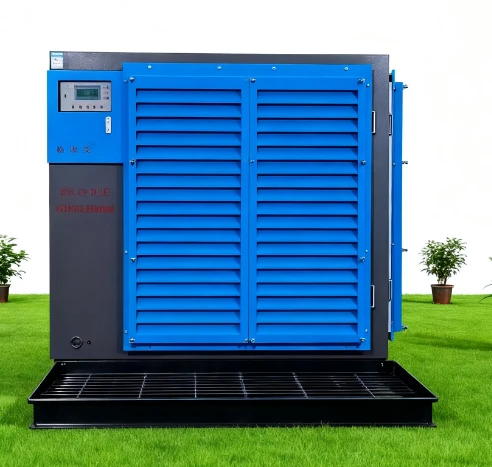
Let's talk about some specific types of screw air compressors we offer. We have the Fixed Speed Screw Air Compressor. This type of compressor is great for applications where a constant air supply is needed. Since it runs at a fixed speed, the operating conditions are relatively stable. However, if it's used in a tough environment, like a construction site with a lot of dust, you still need to be careful with the oil change schedule.
Our Outdoor Use Moisture - proof Screw Air Compressor is designed for outdoor applications. Moisture can be a big problem for the lubricating oil. Water can mix with the oil, causing corrosion and reducing the oil's lubricating properties. If you're using this compressor outdoors, especially in humid or rainy conditions, you should check the oil more frequently and change it as needed. Maybe every 1500 - 2000 hours would be a good idea.
The Motor Driven Portable Screw Air Compressor is very versatile. It can be moved around and used in different locations. The oil change frequency for this compressor also depends on where it's used. If it's used in a small workshop with clean air, you can follow the standard 2000 - 4000 - hour interval. But if it's taken to a dirty or industrial site, you'll need to adjust accordingly.
So, how can you tell when it's time to change the oil? There are a few signs. First, check the color and consistency of the oil. If the oil has turned dark and has a thick, gummy texture, it's probably time for a change. You can also use an oil analysis kit. These kits can tell you about the oil's chemical properties, such as its viscosity, acid number, and the presence of contaminants.
Another way is to monitor the compressor's performance. If you notice a decrease in air pressure, an increase in noise, or if the compressor is running hotter than usual, it could be a sign that the oil is no longer doing its job properly.
In conclusion, there's no exact answer to how often you should change the lubricating oil in a screw air compressor. It depends on the operating hours, the environment, the type of oil, and the load on the compressor. As a supplier, we always recommend following the manufacturer's guidelines, but also being aware of the specific conditions your compressor is operating in.
If you're in the market for a screw air compressor or have any questions about oil changes or maintenance, don't hesitate to reach out. We're here to help you make the best decisions for your compressor needs and ensure it runs efficiently for a long time.
References
- Compressor Manufacturer's Manuals
- Industry Standards for Screw Air Compressor Maintenance


