


Hey there! As a supplier of precision filters, I often get asked about the energy consumption of these nifty devices. So, I thought I'd take a deep dive into this topic and share some insights with you.
First off, let's understand what a precision filter is. A precision filter is a crucial piece of equipment used in various industries to remove contaminants from fluids or gases. It can filter out particles, impurities, and even microorganisms, ensuring that the output is clean and meets the required standards. Whether it's in a manufacturing plant, a laboratory, or a water treatment facility, precision filters play a vital role in maintaining the quality of the process.
Now, let's talk about energy consumption. The energy consumption of a precision filter depends on several factors. One of the most significant factors is the type of filter. There are different types of precision filters, such as membrane filters, cartridge filters, and bag filters, each with its own energy requirements.

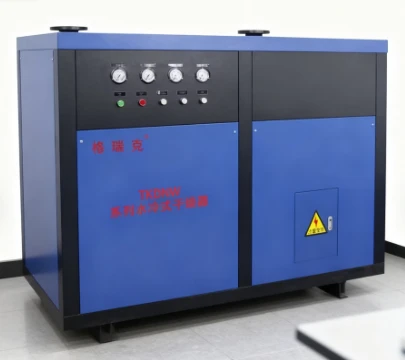
Membrane filters, for example, are known for their high efficiency in removing small particles. They work by forcing the fluid or gas through a thin membrane with tiny pores. The energy required to push the fluid through the membrane depends on the pressure difference across the filter and the flow rate. Generally, membrane filters require a relatively high pressure to operate, which means they consume more energy compared to some other types of filters.
Cartridge filters, on the other hand, use a replaceable cartridge to trap contaminants. They are often used in applications where a large volume of fluid needs to be filtered. The energy consumption of cartridge filters is influenced by the size of the cartridge, the type of filter media, and the flow rate. Smaller cartridges may require less energy to operate, but they may need to be replaced more frequently.
Bag filters are another common type of precision filter. They are typically used for filtering large volumes of liquids. Bag filters are relatively simple in design and can be cost - effective. The energy consumption of bag filters is mainly related to the pressure drop across the filter and the flow rate. As the filter bag accumulates contaminants, the pressure drop increases, which may require more energy to maintain the flow.
Another factor that affects the energy consumption of a precision filter is the filtration efficiency. Higher filtration efficiency usually means that the filter can remove smaller particles. However, achieving higher efficiency often requires more energy. For example, a filter that can remove particles as small as 0.1 microns will likely consume more energy than a filter that can only remove particles larger than 1 micron.
The operating conditions also play a crucial role in energy consumption. If the fluid or gas being filtered has a high viscosity, it will require more energy to push it through the filter. Similarly, if the temperature of the fluid is low, its viscosity may increase, leading to higher energy consumption.
Let's take a look at some real - world scenarios. In a compressed air system, precision filters are used to remove oil, water, and dust from the compressed air. The energy consumption of these filters can have a significant impact on the overall energy cost of the system. For instance, if the filter is not properly maintained, the pressure drop across the filter will increase over time. This means that the compressor has to work harder to maintain the required air pressure, resulting in higher energy consumption.
To reduce the energy consumption of precision filters, regular maintenance is essential. This includes cleaning or replacing the filter media at the recommended intervals. By keeping the filter clean, the pressure drop can be minimized, and the energy consumption can be reduced.
Now, let's mention some related equipment. If you're dealing with compressed air systems, you might also be interested in Freezing Dryer, Heatless Combined Dryer, and Non Thermal Regeneration Adsorption Dryer. These dryers work in conjunction with precision filters to ensure that the compressed air is clean and dry.
As a precision filter supplier, I understand the importance of energy efficiency. That's why we offer a wide range of precision filters that are designed to be energy - efficient without compromising on filtration performance. Our filters are made from high - quality materials and are engineered to minimize pressure drop and reduce energy consumption.
If you're in the market for precision filters or have any questions about energy consumption, I'd love to hear from you. Whether you're a small business or a large industrial facility, we can provide you with the right filter solutions to meet your needs. Contact us for a detailed consultation and let's discuss how we can help you optimize your filtration process while keeping your energy costs in check.
In conclusion, the energy consumption of a precision filter is influenced by multiple factors, including the type of filter, filtration efficiency, and operating conditions. By understanding these factors and taking appropriate measures, such as regular maintenance, you can reduce the energy consumption of your filtration system. And if you're looking for reliable and energy - efficient precision filters, don't hesitate to reach out.
References:
- "Filtration Handbook" by Christopher D. Metzger
- Industry reports on compressed air treatment and filtration


