


Hey there! As a supplier of Non Thermal Regeneration Adsorption Dryers, I'm super stoked to dive into the working principle of these nifty machines with you. So, let's get right into it!
What's the Deal with Non Thermal Regeneration Adsorption Dryers?
First off, you might be wondering what a Non Thermal Regeneration Adsorption Dryer is all about. Well, these dryers are a crucial part of compressed air systems. They're designed to remove moisture from compressed air, which is super important because moisture in compressed air can cause all sorts of problems, like corrosion in pipes, damage to pneumatic tools, and even affect the quality of products in manufacturing processes.
The Basics of Adsorption
To understand how these dryers work, we need to talk a bit about adsorption. Adsorption is a process where molecules of a gas or liquid (in our case, water vapor) stick to the surface of a solid material, called an adsorbent. Think of it like a sponge soaking up water, but on a molecular level.
The most common adsorbents used in Non Thermal Regeneration Adsorption Dryers are activated alumina and silica gel. These materials have a huge surface area, which means they can hold a lot of water vapor. When compressed air passes through the adsorbent bed, the water vapor in the air gets adsorbed onto the surface of the adsorbent, leaving behind dry air.
The Working Cycle
A Non Thermal Regeneration Adsorption Dryer typically has two adsorbent beds: one that's working (adsorbing moisture) and one that's being regenerated (having the moisture removed). Let's break down the working cycle step by step.
Step 1: Adsorption Phase
During the adsorption phase, the wet compressed air enters the dryer and flows through one of the adsorbent beds. As the air passes through the bed, the water vapor in the air is adsorbed onto the adsorbent. The dry air then exits the dryer and is ready to be used in the compressed air system.
This process continues until the adsorbent bed becomes saturated with water vapor. How long this takes depends on a few factors, like the flow rate of the compressed air, the temperature and humidity of the incoming air, and the size of the adsorbent bed.
Step 2: Regeneration Phase
Once the adsorbent bed is saturated, it needs to be regenerated so it can start adsorbing moisture again. In a Non Thermal Regeneration Adsorption Dryer, the regeneration process is done without using any external heat. Instead, a small amount of the dry air that was produced during the adsorption phase is used to purge the saturated adsorbent bed.
Here's how it works. The dry purge air is directed into the saturated adsorbent bed in the opposite direction of the incoming wet air. As the purge air flows through the bed, it picks up the water vapor that was adsorbed onto the adsorbent and carries it out of the dryer. This process continues until the adsorbent bed is dry again.
Step 3: Switching Beds
After the regeneration phase is complete, the dryer switches the flow of compressed air from the saturated bed to the regenerated bed. The saturated bed then goes through the regeneration process while the regenerated bed starts adsorbing moisture again. This cycle repeats continuously to provide a constant supply of dry compressed air.
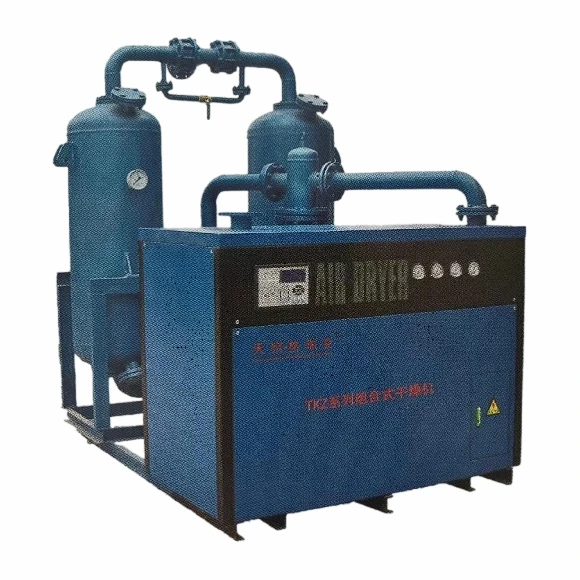

Why Choose a Non Thermal Regeneration Adsorption Dryer?
There are a few reasons why Non Thermal Regeneration Adsorption Dryers are a popular choice for many applications.
Energy Efficiency
Since these dryers don't use any external heat for regeneration, they're more energy-efficient compared to thermal regeneration dryers. This can result in significant cost savings over time, especially for large compressed air systems.
Reliability
Non Thermal Regeneration Adsorption Dryers are known for their reliability. They have a simple design with few moving parts, which means there's less that can go wrong. This makes them a great choice for applications where downtime is not an option.
High-Quality Dry Air
These dryers can produce very dry compressed air, with a dew point as low as -40°F (-40°C). This makes them suitable for applications where a high level of dryness is required, like in the pharmaceutical, food and beverage, and electronics industries.
Related Equipment
If you're in the market for a Non Thermal Regeneration Adsorption Dryer, you might also be interested in some related equipment. For example, a Precision Filter can be used to remove any solid particles or oil aerosols from the compressed air before it enters the dryer. This can help extend the life of the adsorbent bed and improve the overall performance of the dryer.
Another option is a Heatless Combined Dryer. This type of dryer combines the features of a refrigerated dryer and a Non Thermal Regeneration Adsorption Dryer to provide even more efficient and effective moisture removal.
Conclusion
So, there you have it! That's the working principle of a Non Thermal Regeneration Adsorption Dryer in a nutshell. These dryers are a great way to remove moisture from compressed air and ensure the reliability and efficiency of your compressed air system.
If you're interested in learning more about our Non Thermal Regeneration Adsorption Dryers or have any questions about compressed air treatment, don't hesitate to reach out. We're here to help you find the right solution for your needs. You can check out our Non Thermal Regeneration Adsorption Dryer page for more detailed information.
Let's start a conversation and see how we can work together to improve your compressed air system. Whether you're a small business or a large industrial operation, we've got the expertise and the products to meet your requirements.
References
- Compressed Air and Gas Handbook, 4th Edition
- Industrial Drying Handbook, 3rd Edition


