


In the industrial landscape, compressed air systems are the lifeblood of numerous operations, powering everything from manufacturing machinery to pneumatic tools. A Micro Heat Combined Dryer plays a crucial role in these systems by removing moisture from compressed air, ensuring the reliability and efficiency of downstream equipment. However, sudden power outages can pose significant challenges to the proper functioning of these dryers. As a supplier of Micro Heat Combined Dryers, I am well - versed in understanding how these units handle such unforeseen events.
Understanding the Micro Heat Combined Dryer
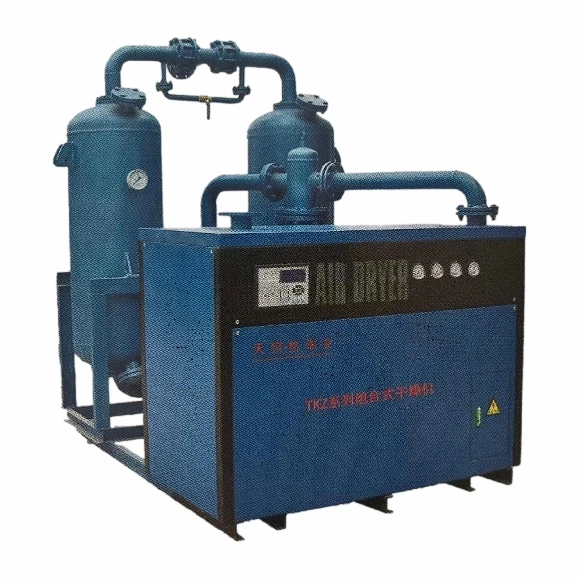
Before delving into how a Micro Heat Combined Dryer deals with sudden power outages, it's essential to understand its basic operation. A Micro Heat Combined Dryer combines the advantages of heatless and heated desiccant dryers. It uses a desiccant material, typically activated alumina or molecular sieve, to adsorb water vapor from the compressed air.
The drying process involves two towers. One tower is in the drying mode, where it removes moisture from the incoming compressed air. Simultaneously, the other tower is in the regeneration mode. In the regeneration process, a small portion of the dried air is heated and passed through the desiccant bed to remove the adsorbed moisture, rejuvenating the desiccant for the next drying cycle.
Immediate Impact of a Power Outage
When a sudden power outage occurs, the immediate effect on a Micro Heat Combined Dryer is the cessation of all electrically - powered components. The heater, which is responsible for heating the regeneration air, stops working. Without heat, the regeneration process cannot proceed as normal. The blower, if present in the system to assist in the air flow during regeneration, also stops.
The control system of the dryer, which manages the switching between the drying and regeneration cycles, loses power. This can disrupt the carefully timed sequence of operations. For example, if the dryer was in the middle of a regeneration cycle when the power went out, the desiccant in the regeneration tower may not be fully regenerated.
Built - in Safety Mechanisms
To mitigate the negative impacts of power outages, Micro Heat Combined Dryers are equipped with several built - in safety mechanisms. One of the primary features is the use of non - electrically operated valves. These valves are designed to close automatically in the event of a power outage. For instance, the valves that control the flow of compressed air into and out of the dryer will close, preventing any unwanted air leakage or pressure imbalances within the system.
Some dryers also have a backup battery system for the control panel. This battery can provide enough power to maintain the control system for a short period, allowing the dryer to complete the current cycle or at least shut down in an orderly manner. The backup battery can power the sensors and the control logic, enabling the dryer to record the state of operation at the time of the power outage. This information can be used later when the power is restored to resume the operation correctly.
Post - Power Outage Recovery
Once the power is restored, the Micro Heat Combined Dryer needs to go through a recovery process. The first step is to ensure that the control system is functioning properly. If the dryer was equipped with a backup battery, the control system can quickly resume its normal operation based on the stored state information.
The heater and blower need to be restarted. However, it's important to note that the desiccant in the regeneration tower may not be fully dry if the power outage occurred during the regeneration cycle. To address this, the dryer may be programmed to extend the regeneration time for the affected tower. This extended regeneration period allows the desiccant to be thoroughly dried, ensuring that it can effectively remove moisture during the next drying cycle.
Comparison with Other Types of Dryers
When comparing how a Micro Heat Combined Dryer handles power outages with other types of dryers, such as a Heatless Combined Dryer, there are some notable differences. Heatless dryers rely solely on the expansion of a small portion of dried air for regeneration. Since they do not have a heater, a power outage has less of an impact on the regeneration process itself. However, the control system and valve operations in heatless dryers are still affected by power outages.
Micro Heat Combined Dryers, on the other hand, are more complex due to the presence of the heater. The heater is a critical component for efficient regeneration, and its failure during a power outage can have a more significant impact on the overall performance of the dryer. But the advanced control systems and backup mechanisms in Micro Heat Combined Dryers are designed to handle these challenges more effectively.

Role of Precision Filters in the Recovery Process
Precision Filters play an important role in the post - power outage recovery of a Micro Heat Combined Dryer. During the power outage and the subsequent recovery, there is a risk of contaminants being introduced into the compressed air system. For example, if the desiccant in the dryer is not fully regenerated, it may release small particles into the air stream.
Precision filters are installed downstream of the dryer to remove these contaminants. They can capture solid particles, oil aerosols, and even some water droplets that may have bypassed the dryer during the disrupted operation. By ensuring the quality of the compressed air, precision filters protect the downstream equipment from damage and maintain the overall efficiency of the compressed air system.
Long - Term Considerations
Frequent power outages can have long - term effects on the performance and lifespan of a Micro Heat Combined Dryer. The repeated interruption of the regeneration process can lead to incomplete regeneration of the desiccant over time. This can result in reduced drying efficiency, as the desiccant will not be able to adsorb as much moisture as it should.
To address these long - term issues, it may be necessary to perform more frequent maintenance on the dryer. This includes replacing the desiccant more often, as well as inspecting and servicing the valves, heater, and blower. Regular monitoring of the dryer's performance parameters, such as dew point and pressure drop, can also help detect any signs of degradation early on.
Importance of Choosing the Right Dryer
When selecting a Micro Heat Combined Dryer for an industrial application, it's crucial to consider the frequency of power outages in the area. If the location is prone to power disruptions, choosing a dryer with robust backup systems and reliable safety mechanisms is essential. Some dryers are specifically designed to handle power outages better, with features such as longer - lasting backup batteries and more advanced control algorithms.
Contact for Purchase and Consultation
If you are in the market for a high - quality Micro Heat Combined Dryer that can effectively handle sudden power outages, we are here to help. Our team of experts can provide you with detailed information about our products, including their features, performance, and how they are designed to cope with various operational challenges. Whether you need a dryer for a small - scale operation or a large industrial facility, we have the right solution for you. Contact us today to start a conversation about your compressed air treatment needs.
References
- Compressed Air Handbook, various editions, for general information on compressed air systems and dryer operations.
- Manufacturer's technical documentation for Micro Heat Combined Dryers, which provides detailed information on the design, operation, and safety features of the dryers.


