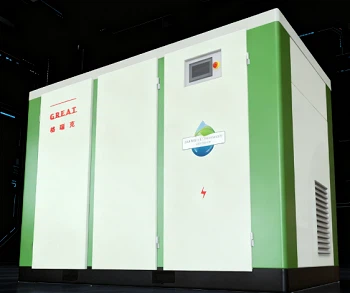
As a supplier of Dust Explosion - proof Screw Air Compressors, ensuring the proper operation and monitoring of these critical machines is of utmost importance. In this blog, I'll share some insights on how to effectively monitor the operation status of a Dust Explosion - proof Screw Air Compressor.
1. Understanding the Basics of Dust Explosion - proof Screw Air Compressors
Before delving into monitoring, it's essential to understand the key components and functions of a Dust Explosion - proof Screw Air Compressor. These compressors are designed to operate in environments where there is a risk of dust explosions. They are equipped with special features such as explosion - proof enclosures, spark - resistant materials, and advanced filtration systems to prevent the ignition of dust particles.
The main components of a screw air compressor include the air intake filter, compression chamber, oil separator, cooler, and control system. The air intake filter removes large particles from the incoming air, while the compression chamber compresses the air to the desired pressure. The oil separator separates the lubricating oil from the compressed air, and the cooler reduces the temperature of the compressed air. The control system manages the operation of the compressor, including starting, stopping, and adjusting the pressure.
2. Monitoring Parameters
Temperature Monitoring
Temperature is a crucial parameter to monitor in a Dust Explosion - proof Screw Air Compressor. High temperatures can indicate issues such as overloading, poor lubrication, or blocked cooling systems. There are several key temperature points to monitor:
- Compressor Discharge Temperature: This is the temperature of the compressed air as it leaves the compression chamber. A high discharge temperature can cause damage to the compressor components and increase the risk of oil degradation. It is recommended to set an upper limit for the discharge temperature and install a temperature sensor to monitor it continuously.
- Oil Temperature: The oil in the compressor serves as a lubricant and coolant. If the oil temperature is too high, it can lose its lubricating properties and cause excessive wear on the compressor parts. Monitoring the oil temperature can help detect problems such as insufficient oil flow or a malfunctioning oil cooler.
- Cooler Inlet and Outlet Temperatures: Monitoring the temperatures at the inlet and outlet of the cooler can provide insights into the efficiency of the cooling system. A large difference between the inlet and outlet temperatures indicates that the cooler is working effectively.
Pressure Monitoring
Pressure is another important parameter to monitor. The following pressure points should be monitored:
- Suction Pressure: This is the pressure of the air at the inlet of the compressor. A low suction pressure can indicate a blocked air intake filter or a problem with the air supply system.
- Discharge Pressure: The discharge pressure is the pressure of the compressed air as it leaves the compressor. Maintaining a stable discharge pressure is essential for the proper operation of the downstream equipment. Fluctuations in the discharge pressure can be caused by issues such as a faulty pressure regulator or a leak in the system.
- Oil Pressure: The oil pressure is crucial for proper lubrication of the compressor components. A low oil pressure can lead to increased friction and wear, while a high oil pressure can cause oil leakage.
Vibration Monitoring
Vibration can be an early indicator of mechanical problems in the compressor. Excessive vibration can be caused by unbalanced rotating parts, loose bolts, or misalignment. Installing vibration sensors on the compressor can help detect abnormal vibrations and take corrective actions before major damage occurs.
Air Quality Monitoring
In a Dust Explosion - proof Screw Air Compressor, monitoring the air quality is essential to ensure that the compressed air is free from dust and other contaminants. This can be done by installing air quality sensors such as particulate counters and gas analyzers. Monitoring the air quality can help prevent damage to the downstream equipment and ensure the safety of the working environment.
3. Monitoring Methods
Manual Monitoring
Manual monitoring involves periodically checking the compressor's parameters using gauges and meters. This method is simple and cost - effective but has limitations. It requires regular visits to the compressor site, and the data collection is not continuous. Manual monitoring is suitable for small - scale operations or as a backup to automated monitoring systems.
Automated Monitoring Systems
Automated monitoring systems use sensors and controllers to continuously monitor the compressor's parameters and send the data to a central monitoring station. These systems can provide real - time data, generate alarms when abnormal conditions are detected, and even allow for remote monitoring and control. There are several types of automated monitoring systems available:
- PLC - based Systems: Programmable Logic Controllers (PLCs) are widely used in industrial automation. They can be programmed to monitor multiple parameters, perform calculations, and control the operation of the compressor. PLC - based systems are reliable and can be customized to meet the specific requirements of the compressor.
- SCADA Systems: Supervisory Control and Data Acquisition (SCADA) systems are used for large - scale monitoring and control of industrial processes. They can collect data from multiple compressors and other equipment, display the data on a graphical user interface, and generate reports. SCADA systems are suitable for monitoring compressors in a complex industrial environment.
4. Using Monitoring Data for Maintenance and Troubleshooting
The data collected from the monitoring systems can be used for preventive maintenance and troubleshooting. By analyzing the trends in the data, it is possible to predict potential problems and take proactive measures to prevent them. For example, if the discharge temperature is gradually increasing over time, it may indicate a problem with the cooling system. By taking corrective actions such as cleaning the cooler or checking the coolant level, the problem can be resolved before it causes major damage to the compressor.
In addition, the monitoring data can be used to troubleshoot problems when they occur. For example, if the compressor suddenly stops working, the monitoring data can be analyzed to determine the cause of the problem, such as a power failure, a pressure sensor malfunction, or an over - temperature condition.
5. Other Related Compressors
In addition to Dust Explosion - proof Screw Air Compressors, we also offer a range of other high - quality screw air compressors, such as the Outdoor Use Moisture - proof Screw Air Compressor, which is designed for outdoor applications and can withstand harsh environmental conditions. The Screw Laser Cutting Air Compressor is specifically designed for laser cutting applications, providing high - quality compressed air with low moisture and oil content. And the Fixed Speed 2 - stage Compression Screw Air Compressor offers high efficiency and reliable performance.
6. Conclusion
Monitoring the operation status of a Dust Explosion - proof Screw Air Compressor is essential for ensuring its safe and efficient operation. By monitoring key parameters such as temperature, pressure, vibration, and air quality, and using the appropriate monitoring methods, potential problems can be detected early and corrective actions can be taken. The monitoring data can also be used for preventive maintenance and troubleshooting, which can reduce downtime and extend the lifespan of the compressor.


If you are interested in our Dust Explosion - proof Screw Air Compressors or any of our other products, please feel free to contact us for more information and to discuss your specific requirements. We are committed to providing high - quality products and excellent customer service.
References
- Compressor Handbook, by Klaus Brun and Eckhard U. Schoeck
- Industrial Air Compressor Systems: Selection, Installation, and Maintenance, by Peter Jackson