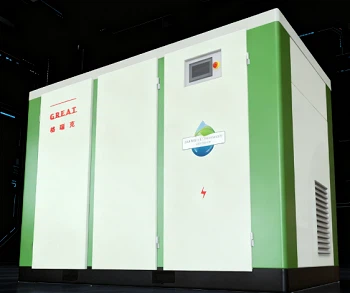
Hey there! As a supplier of Air Compressor Vacuum Pump, I often get asked about the air flow direction in an air compressor vacuum pump. It might seem like a technical detail, but understanding it is super important for anyone looking to use these pumps effectively. So, let's dive right in!
Basics of Air Compressor Vacuum Pumps
First off, what's the deal with air compressor vacuum pumps? Well, they're pretty handy devices that can both compress air and create a vacuum. This dual functionality makes them useful in a whole bunch of industries, from manufacturing to food packaging.
When we talk about air flow direction, we're essentially looking at how air moves through the pump. This movement is crucial because it determines how well the pump can perform its tasks, whether it's pushing air into a container or sucking it out.
Air Flow Direction During Compression
Let's start with the compression side. When an air compressor vacuum pump is in compression mode, the air flow direction is from the intake to the outlet. Here's a step - by - step breakdown of what happens:


- Intake: The pump has an intake port where air from the surrounding environment is drawn in. This air can be at atmospheric pressure. For example, in a workshop, the pump will take in the regular air in the room.
- Compression Chamber: Once the air enters the pump, it moves into the compression chamber. Inside this chamber, the volume of the air is reduced. This reduction in volume increases the pressure of the air, according to Boyle's law (more on that later).
- Outlet: After compression, the high - pressure air is pushed out through the outlet port. This high - pressure air can then be used for various applications, like powering pneumatic tools or filling up tires.
The key here is that the air flow is a one - way street, moving steadily from the intake to the outlet during compression. This unidirectional flow is maintained by check valves, which prevent the air from flowing back in the wrong direction.
Air Flow Direction During Vacuum Creation
Now, let's switch gears and look at the vacuum creation process. When the pump is creating a vacuum, the air flow direction is the opposite of what it is during compression.
- Inlet (now the suction point): The pump starts by using its suction power to draw air out of a closed system. For instance, if you're using the pump to create a vacuum in a sealed container, the air inside the container is pulled out through the inlet port of the pump.
- Pump Interior: The air then travels through the pump's internal components. The pump works to remove as much air as possible from the system, reducing the pressure inside the system to create a vacuum.
- Exhaust: Finally, the air that has been removed from the system is expelled through the exhaust port of the pump. The goal is to get the pressure inside the system as low as possible, approaching a perfect vacuum (although a perfect vacuum is almost impossible to achieve in real - world scenarios).
Just like in compression, check valves play a crucial role here. They ensure that the air flows in the correct direction, from the system being evacuated to the exhaust.
Factors Affecting Air Flow Direction
There are a few factors that can affect the air flow direction and the overall performance of the air compressor vacuum pump:
- Valve Functionality: As mentioned earlier, check valves are essential for maintaining the correct air flow direction. If these valves are damaged or malfunctioning, the air may flow in the wrong direction, reducing the pump's efficiency.
- Pump Design: The design of the pump, including the shape and size of the intake, compression chamber, and outlet ports, can also impact the air flow. A well - designed pump will have smooth passages that allow for efficient air movement.
- External Pressure: The pressure of the air outside the pump and in the system being compressed or evacuated can affect the air flow. For example, if the pressure outside the pump is very high, it may be more difficult for the pump to draw in air during the intake phase.
The Role of Physics in Air Flow
Understanding the air flow direction also involves a bit of physics. Boyle's law states that for a given mass of an ideal gas at a constant temperature, the pressure and volume are inversely proportional. This law explains why the air pressure increases when the volume is reduced in the compression chamber during the compression process.
Similarly, when creating a vacuum, the removal of air from a closed system reduces the number of air molecules, which in turn reduces the pressure inside the system. This pressure difference between the system and the pump drives the air flow during vacuum creation.
Importance of Correct Air Flow Direction
Getting the air flow direction right is crucial for several reasons:
- Efficiency: A proper air flow direction ensures that the pump operates at maximum efficiency. If the air is flowing in the wrong direction, the pump will have to work harder, consuming more energy and potentially overheating.
- Performance: For applications that rely on high - pressure air or a strong vacuum, incorrect air flow can lead to poor performance. For example, a pneumatic tool may not work properly if the air pressure is not consistent due to incorrect air flow.
- Longevity: Maintaining the correct air flow direction helps to reduce wear and tear on the pump's components. Check valves and other internal parts are less likely to be damaged when the air is flowing as it should.
Related Accessories and Their Impact on Air Flow
As a supplier, I also offer related accessories that can impact the air flow in an air compressor vacuum pump. For example, the Spin - On Fuel Filter can play a role. This filter is often used to remove contaminants from the air or fuel (in the case of some pumps that use fuel for operation). A clogged filter can restrict the air flow, reducing the pump's performance.
Another important accessory is the Electrical Machinery for Air Compressor Air. This machinery powers the pump, and if it's not working properly, it can affect the speed and efficiency of the air flow.
Wrapping Up and Invitation to Connect
So, there you have it - a detailed look at the air flow direction in an air compressor vacuum pump. Whether you're using the pump for compression or vacuum creation, understanding how the air moves through the pump is key to getting the most out of it.
If you're in the market for an air compressor vacuum pump or any of the related accessories I mentioned, I'd love to have a chat. Whether you have questions about air flow, pump performance, or just need some advice on which product is right for your application, I'm here to help. Reach out to start a conversation about your procurement needs, and let's find the perfect solution for you.
References
- Halliday, David, Robert Resnick, and Jearl Walker. Fundamentals of Physics. Wiley, 2013.
- Oberg, Erik, et al. Machinery's Handbook. Industrial Press, 2016.