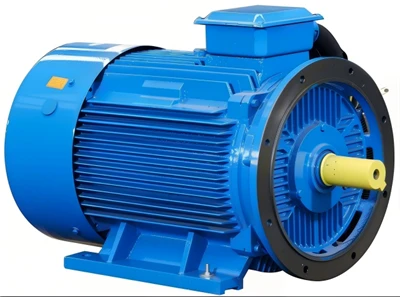
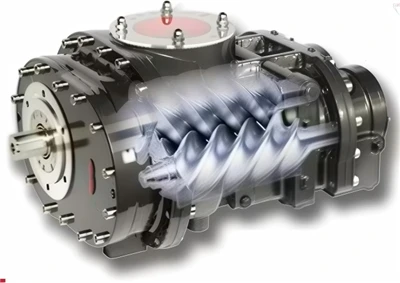
In industrial production, air compressors, known as the "power heart," account for 15% to 25% of an enterprise's total energy consumption, and even over 30% in some high-load enterprises. With the advancement of the "dual carbon" goals and the upgrading of enterprises' cost-reduction needs, energy-saving transformation of air compressors has shifted from an "optional optimization" to a "mandatory measure." Only by mastering scientific transformation paths can enterprises truly achieve the dual reduction of energy consumption and costs.
I. Three "Invisible Killers" of High Energy Consumption in Air Compressors
The high energy consumption of air compressors in most enterprises is not due to outdated equipment itself, but rather "hidden waste" during operation:
Pressure Matching Imbalance: To meet the needs of a few high-pressure equipment, air compressors operate for a long time at a pressure 0.2-0.5MPa higher than the actual demand. Data shows that for every 0.1MPa reduction in discharge pressure, the energy consumption of air compressors can decrease by 7%-8%, and the energy waste caused by excessive pressurization can reach 10%-15%.
Uncontrolled No-Load Operation: During production intervals, air compressors fail to shut down or unload in a timely manner, resulting in "idle power consumption." The no-load energy consumption of ordinary screw air compressors is about 30%-40% of the full-load consumption. If they run idle for 2 hours a day, the extra electricity cost can amount to tens of thousands of yuan a year.
Delayed Heat Dissipation and Maintenance: Scale formation in the cooling system and clogging of air filters in oil-cooled air compressors can cause the discharge temperature to rise by 5-10℃, reducing the compressor efficiency by 5%-10%. Failure to replace deteriorated lubricating oil in time not only increases mechanical wear but also further intensifies energy consumption.
II. Three Core Energy-Saving Transformation Solutions for Different Scenarios
In view of the differences in air compressor models, operating conditions, and load characteristics of different enterprises, differentiated transformation solutions must be selected to achieve "precision energy saving":
| Transformation Type | Core Principle | Applicable Scenarios | Energy-Saving Effect |
|---|---|---|---|
| Frequency Conversion Transformation | Install a frequency converter to dynamically adjust the air compressor speed according to air demand (increase speed when air demand is high, decrease speed when demand is low), avoiding energy waste from constant-speed operation. | Scenarios with large fluctuations in air demand (e.g., mechanical processing, food packaging, where there are obvious differences in air usage between day and night or different time periods). | Average energy saving of 20%-40%, and up to over 50% in scenarios with severe fluctuations. |
| System Pressure Optimization | 1. Sort out the pressure requirements of all air-consuming equipment in the workshop and remove redundant pressure boosting valves; 2. Adopt "zoned air supply" – equip high-pressure equipment with small independent boosters and connect low-pressure equipment to the main system. | Workshops where equipment has significant differences in pressure requirements (e.g., both pneumatic punches requiring 0.8MPa and pneumatic conveying equipment requiring 0.4MPa coexist). | Energy consumption reduced by 8%-15%, while reducing equipment pressure loss and extending the service life of pneumatic components. |
| Waste Heat Recovery and Utilization | Install waste heat recovery devices (such as heat exchangers and hot water circulation systems) to recover over 80% of the waste heat generated during air compressor operation (exhaust waste heat, oil cooling waste heat) for workshop heating, employees' domestic hot water, or production process heating. | Enterprises with stable hot water/heating needs (e.g., chemical, textile, food processing industries, or factories in northern China). | Waste heat recovery rate of 70%-90%, which can replace traditional electric heating or gas-fired boilers, saving 100,000 to 500,000 yuan in annual energy costs. |
III. Two Key Points for "Long-Term Energy Saving" After Transformation
Energy-saving transformation is not a "one-time effort"; post-transformation management is essential to maintain the energy-saving effect:
Establish an Energy Consumption Monitoring System: Install energy consumption meters for air compressors to monitor real-time energy consumption of individual units, total system energy consumption, and changes in air demand. Regularly analyze energy consumption data to identify abnormalities in a timely manner (e.g., a sudden increase in energy consumption of an air compressor may indicate component wear or pressure anomalies).
Formulate Targeted Maintenance Plans: Adjust the maintenance cycle according to the characteristics of the transformed equipment – check the heat dissipation of the frequency converter for frequency-converted air compressors every 6-12 months; clean the scale in the heat exchanger of the waste heat recovery system every 3 months; calibrate the pressure and temperature of all transformed equipment every quarter to prevent the attenuation of energy-saving effects due to insufficient maintenance.
Currently, energy-saving transformation of air compressors has become a crucial means for industrial enterprises to achieve "green transformation" and "cost reduction and efficiency improvement." According to industry data, enterprises that have completed energy-saving transformation can typically recover their transformation costs within 1-2 years, and continue to save 10%-30% of air compressor operating costs annually thereafter, truly realizing a win-win situation of "short-term investment and long-term benefits."