

Classification of air compressors
• Velocity type: It relies on the gas to obtain kinetic energy under the action of high-speed rotating impellers, and then slows down in the expansion device to convert kinetic energy into potential energy to increase gas pressure. There are mainly two types: centrifugal and axial flow.
Volumetric: By directly compressing gas to reduce its volume and increase pressure, it can be divided into rotary and reciprocating types. Rotary type includes rotor type, screw type, slide type, etc; Reciprocating includes piston type and membrane type, among which piston type is widely used.
Working principle
Taking the common piston air compressor as an example, the motor drives the crankshaft of the compressor to rotate in a single axis, and through the connecting rod transmission, the piston performs reciprocating motion. When the piston starts moving from the cylinder head, the working volume inside the cylinder increases, and gas pushes open the intake valve along the intake pipe and enters the cylinder. When the working volume reaches its maximum, the intake valve closes. When the piston moves in the opposite direction, the working volume inside the cylinder decreases and the gas pressure increases. When the pressure reaches and is slightly higher than the exhaust pressure, the exhaust valve opens and the gas is discharged from the cylinder. When the piston reaches its limit position, the exhaust valve closes, completing one working cycle.
Common Terms
Pressure: The exhaust pressure on the nameplate of an air compressor is usually the gauge pressure, commonly measured in bar and MPa. 1 kilogram is approximately equal to 1 bar, and 1 MPa equals 10 bar.
• Volume flow rate: also known as exhaust volume or nameplate flow rate, it is the volume of gas discharged by an air compressor per unit time, converted to the intake state. The commonly used units are m ³/min and L/s.
Gas oil content: refers to the mass of oil contained in a unit volume of compressed air, commonly expressed in PPM.
Pressure dew point: When a gas under a certain pressure cools to a certain temperature, the unsaturated water vapor it contains becomes saturated water vapor and precipitates. This temperature is the pressure dew point, which can indicate the dryness of the gas.
Specific power: It is the power consumed per unit volume flow rate of the compressor, measured in KW/m ³, and is an important indicator for evaluating the energy efficiency of the compressor.
Screw type air compressor special
Advantages: fewer components, compact structure, small volume, no vulnerable parts, reliable, long service life, with a major overhaul interval of up to 40000 to 80000 hours; Easy operation and maintenance, capable of achieving unmanned operation; Good power balance and low noise; The exhaust volume is almost unaffected by exhaust pressure and has strong adaptability; Capable of compressing and delivering gases containing liquid and dust.
Disadvantages: The processing of rotor tooth surfaces requires specialized equipment and is costly; Due to the limitations of rotor stiffness and bearing service life, it is only applicable to the medium and low pressure range; When the general displacement is less than 0.2m ³/min, the performance advantage is not obvious and cannot be made into a microcomputer.
Characteristics of piston air compressor
Advantages: The mechanical components are relatively simple, usually consisting of pistons, crankshafts, and cylinders; Affordable prices and low investment costs; Suitable for heavy-duty applications, easy to maintain, with simple maintenance steps that can reduce downtime and costs; It can meet the demand for high-pressure air and can be effectively used in various situations that require high pressure.
Disadvantages: Usually have runtime limitations and may require cooling periods; Compared to screw air compressors, there is greater vibration and noise, higher internal friction, and relatively lower energy conversion efficiency.
Air compressor knowledge
Popular Products
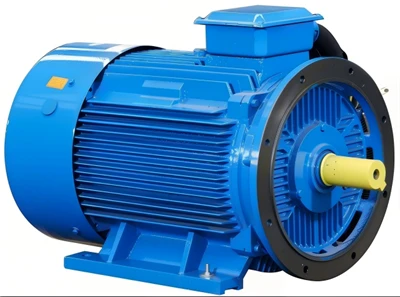
Air Compressor Motor
The motor used is manufactured by a professional motor factory according to high-level requirements, especially the
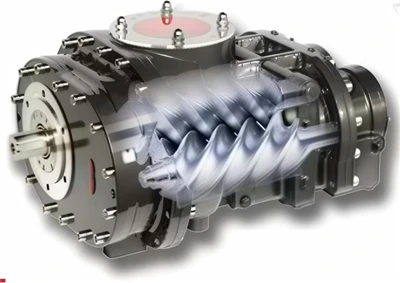
Compressor Air End
The new technology of twin-screw air compressor end makes the aie compressor more stable, efficient and longer service

Fixed Speed Screw Air Compressor TKL 132F
Air compressor is general industry equipment, is the second largest power source, is also the process air source with

Permanent Magnet Variable Frequency Single Stage Compression
The permanent magnet motor remains high efficiency at low speeds, ensuring obvious energy-saving advantages in small

Dust Proof Explosion Proof Screw Air Compressor
Explosion-proof air compressor is adopted on site where there is explosive, inflammable gas or steam. It can operation

Low Pressure Screw Air Compressor PM VSD
This series of air compressors fully demonstrate our company's independent design capabilites, the company has core